Author: Giovanni Maccioni

  • Living the Detail

    Living the Detail

    Sector: Interior Design / Luxury Real Estate / Interior Architecture

    Immersive Interior Design and Emotional Personalisation.

    A leading real estate and design agency needed to market a prestigious four-unit villa before the first stone had even been laid. The main challenge in the real estate sector is bridging the client’s “imagination gap”: even today, despite photorealistic static imagery (the render) being the de facto standard, it is hard to go from an empty plot of land to an emotional perception of one’s future home.

    The starting point was the 2D and 3D digital foundations provided by the design studio, and a solid technical collaboration with architect Sergio Brancolini — capturing every architectural detail and the client’s specifications to ensure that the XR model was the exact transposition of the design vision.

    Applying our photorealistic texturing and dynamic lighting process, we transformed a technical drawing into a vibrant living experience, modelled with precision to be “anchored” exactly to the coordinates of the real plot of land.

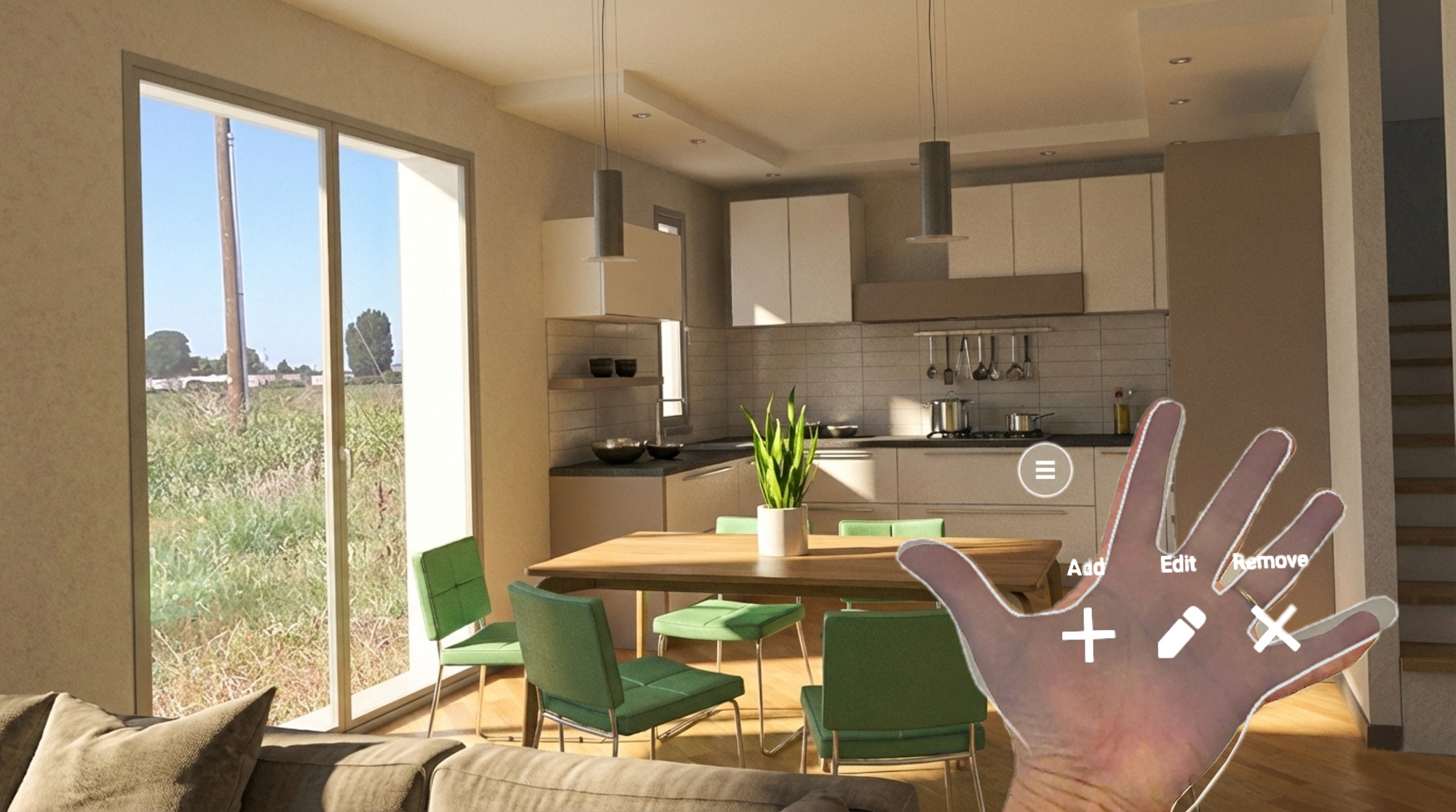
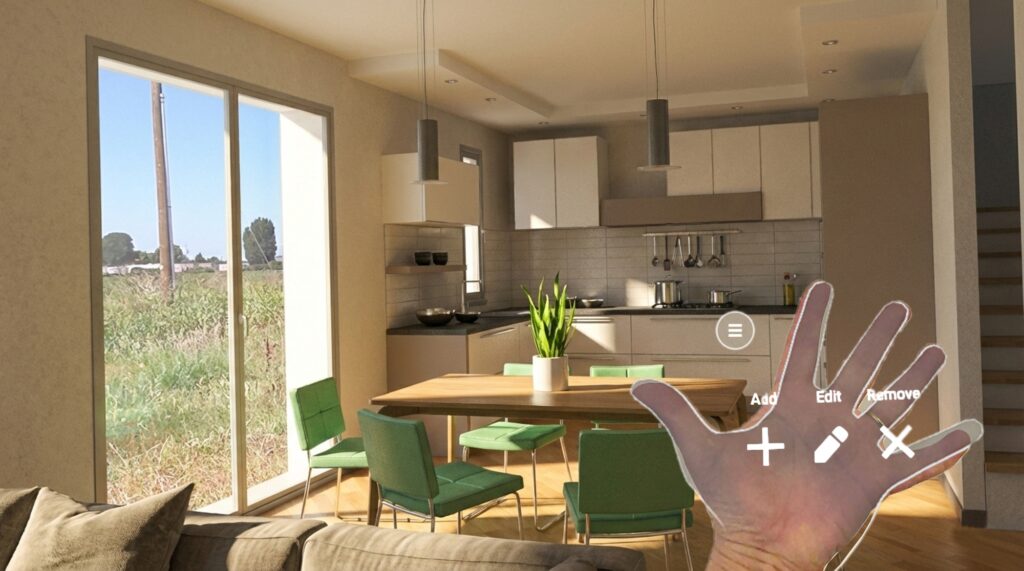
    Using XR headsets, prospective buyers were able to walk in real time on the undeveloped land, watching the villa’s volume appear exactly where it will be built, and walk around it (using our HDT Build App). After allowing clients to perceive the external volumes of the four-unit villa, the challenge shifted indoors: physically entering the rooms and observing the view from windows that do not yet exist, perceiving the spaces, assessing ceiling heights, room depth and the layout of furnishings at 1:1 scale.

    We transformed a project still on paper into a home ready to be lived in: if the exterior sells the investment, the interior sells the daily emotion. The buyer no longer simply “bought a home” — they “began to live in it” months before the keys were handed over.

    App used: HDT Room.
  • The Mistake-Free Furnishing

    The Mistake-Free Furnishing

    Sector: Interior Design / Hospitality / Historic Renovation

    Design Validation and Immersive Interior Design for Prestige Hospitality.

    In a high-level renovation project, the challenge is not only aesthetic but logistical. This case study demonstrates how XR (Extended Reality) is the definitive tool for eliminating the margin of error in furnishing luxury hospitality venues, transforming furniture selection from an act of faith into millimetric certainty.

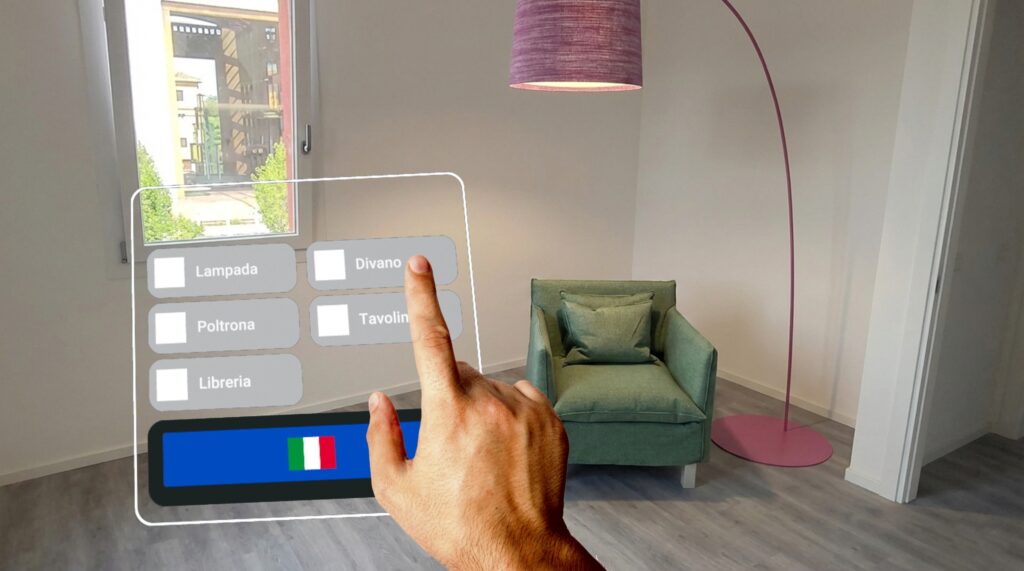
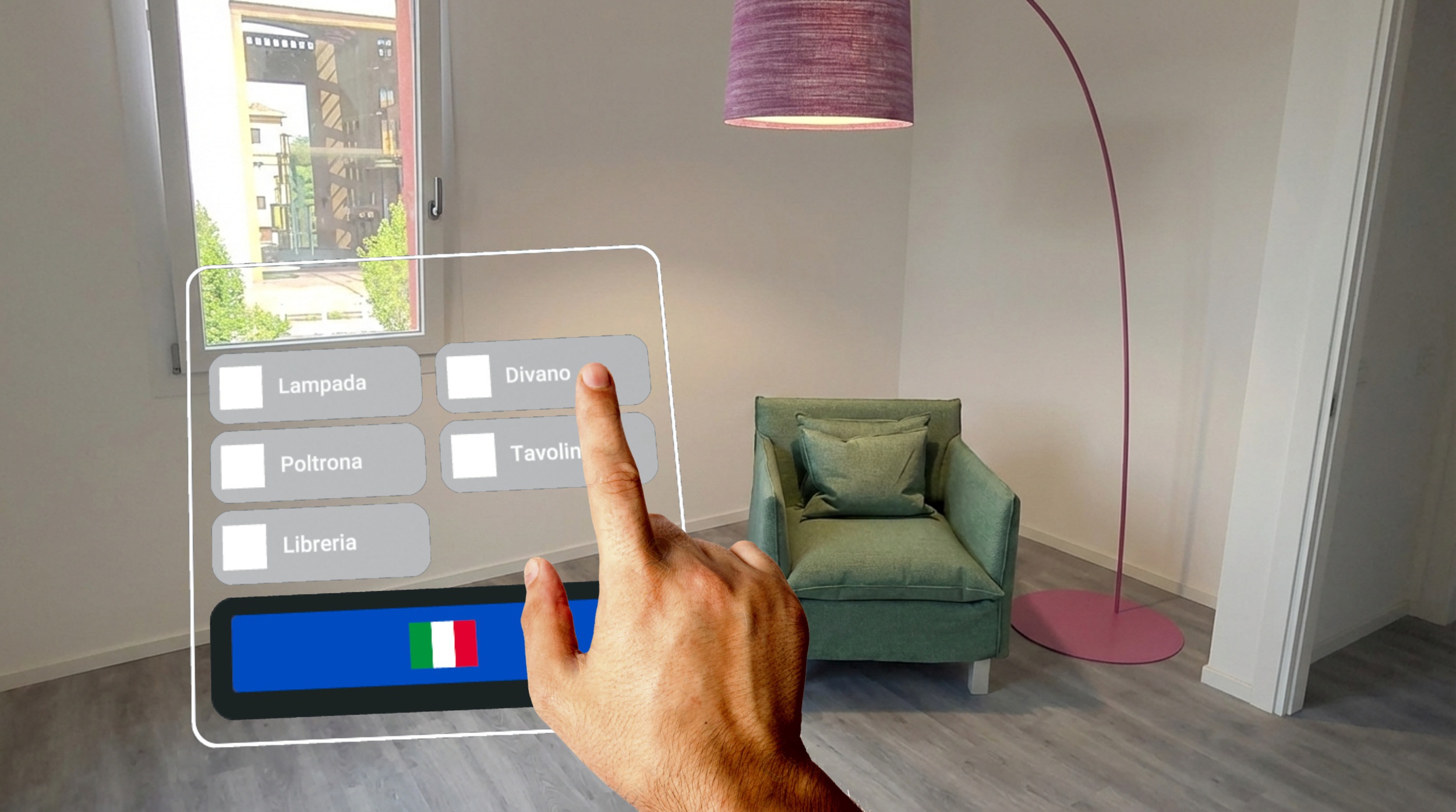
    A private client was completing the transformation of a prestigious historic palazzo near the centre of Modena into holiday apartments. The main challenge lay in validating the furnishings: the selected pieces had to integrate perfectly into historic volumes and spaces optimised for guest accommodation. The risk? Purchasing bulky furniture, items that clashed chromatically, or — worse — pieces that obstructed guest movement flows.

    Starting from the technical survey of the palazzo and the catalogue of selected furnishings, we created a digital twin of the apartments. Rather than limiting ourselves to a static render, we implemented a 1:1-scale XR solution. Our approach allowed the client to put on the headsets and “inhabit” the apartments before a single shelf had been mounted. Thanks to real-time object manipulation, we allowed furniture to be moved interactively: checking passageways and the fluidity of circulation routes, resizing or repositioning elements that, in the virtual world, proved too impactful for a comfortable stay.

    The use of immersive reality eliminated decision-making uncertainty. The client was able to confirm supply orders with the mathematical certainty that every piece was appropriate to the space, with no returns or post-delivery modifications. XR sessions condensed weeks of doubt into a few minutes of direct experience, accelerating the completion of the interior design project.

    The project demonstrated that, in the prestige holiday rental market, technology is not an aesthetic indulgence but a guarantee of architectural quality and investment security.

    App used: HDT Home.

  • Inside the Product

    Inside the Product

    Sector: Mechanical Industry / Trade Fair Exhibitions / Industrial Design / Training

    Digital marketing, model interaction and prototyping.

    In this digital marketing project, XR technology was used as a tool for visualising and interacting with the digital model of products in order to appreciate hidden internal details.

    The client required a new way of presenting products at international trade fairs, where it is not possible or practical to show the internal details of technical components. The main challenges involved the ability to interact simply with the digital model, as well as visualising particular component movements and related technical information in the chosen language — all while maintaining a high level of visual realism inside the stand.

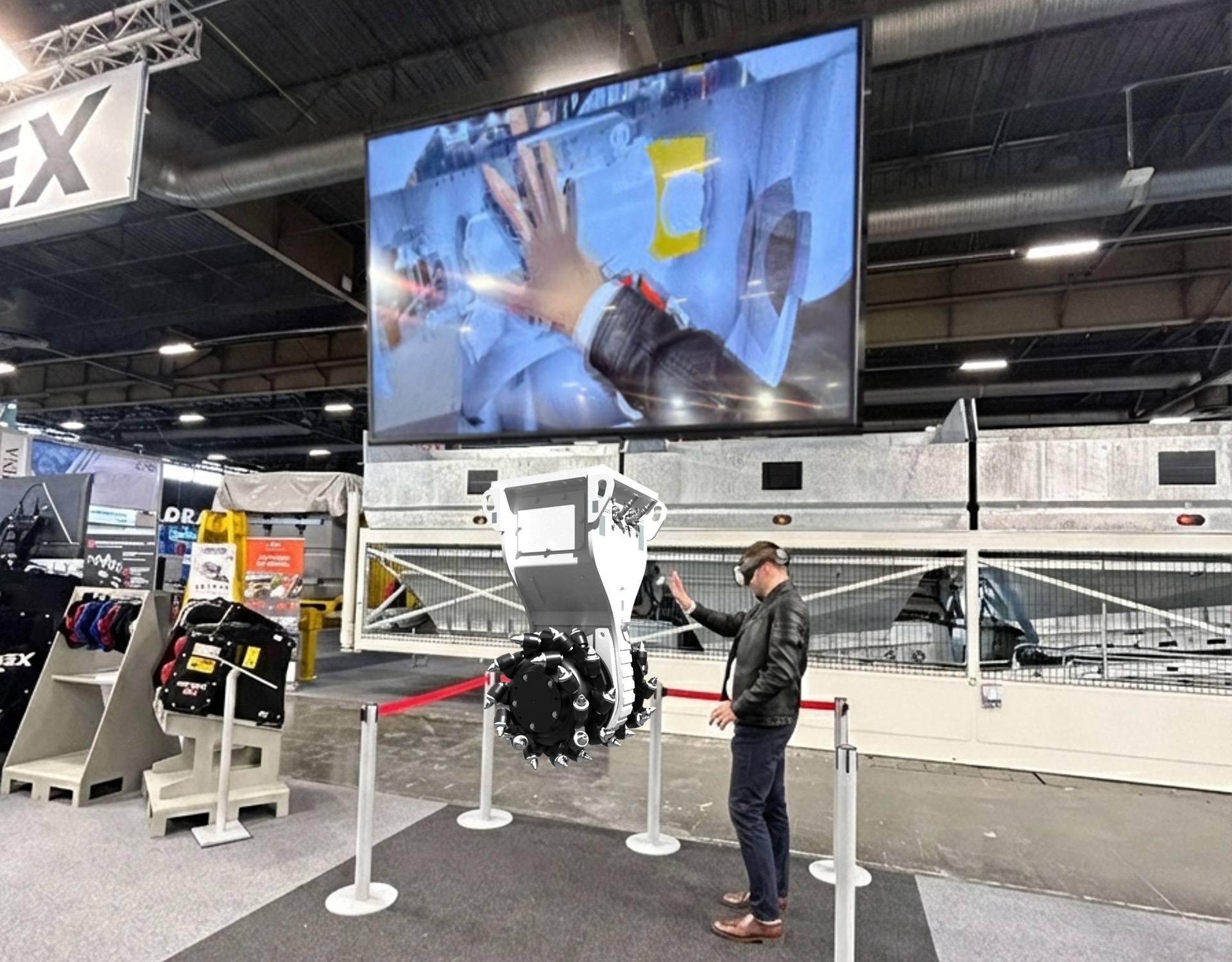
    Using the HDT OBJ App, we created an immersive experience in which visitors could interact simply with the digital twin, navigating inside the product where every detail could be visualised by defining cross-sections and scale dimensions appropriate for optimal analysis.

    Thanks to the simulation, and to the video wall showing the audience the interaction between human and digital twin, the trade fair stand attracted a large portion of the visitors present, renewing the company’s marketing proposition.

    The company can continue to use the APP on-site or at client premises to strengthen its marketing proposition in an innovative way and, above all, at real scale — as if the physical product were present. The ability to use these tools at international fairs in distant countries, where set-up and transport costs are significant, allows savings on marketing budgets while also improving ESG metrics by replacing CO₂-intensive transportation with digital assets.

    App used: HDT Obj.

  • A Bird’s-Eye View: the “Urban Digital Twin” for Citizens

    A Bird’s-Eye View: the “Urban Digital Twin” for Citizens

    Sector: Smart City / Tourism / Edutainment

    The Historic Centre in Miniature: An Immersive Experience between Urban Studies and Tourism.

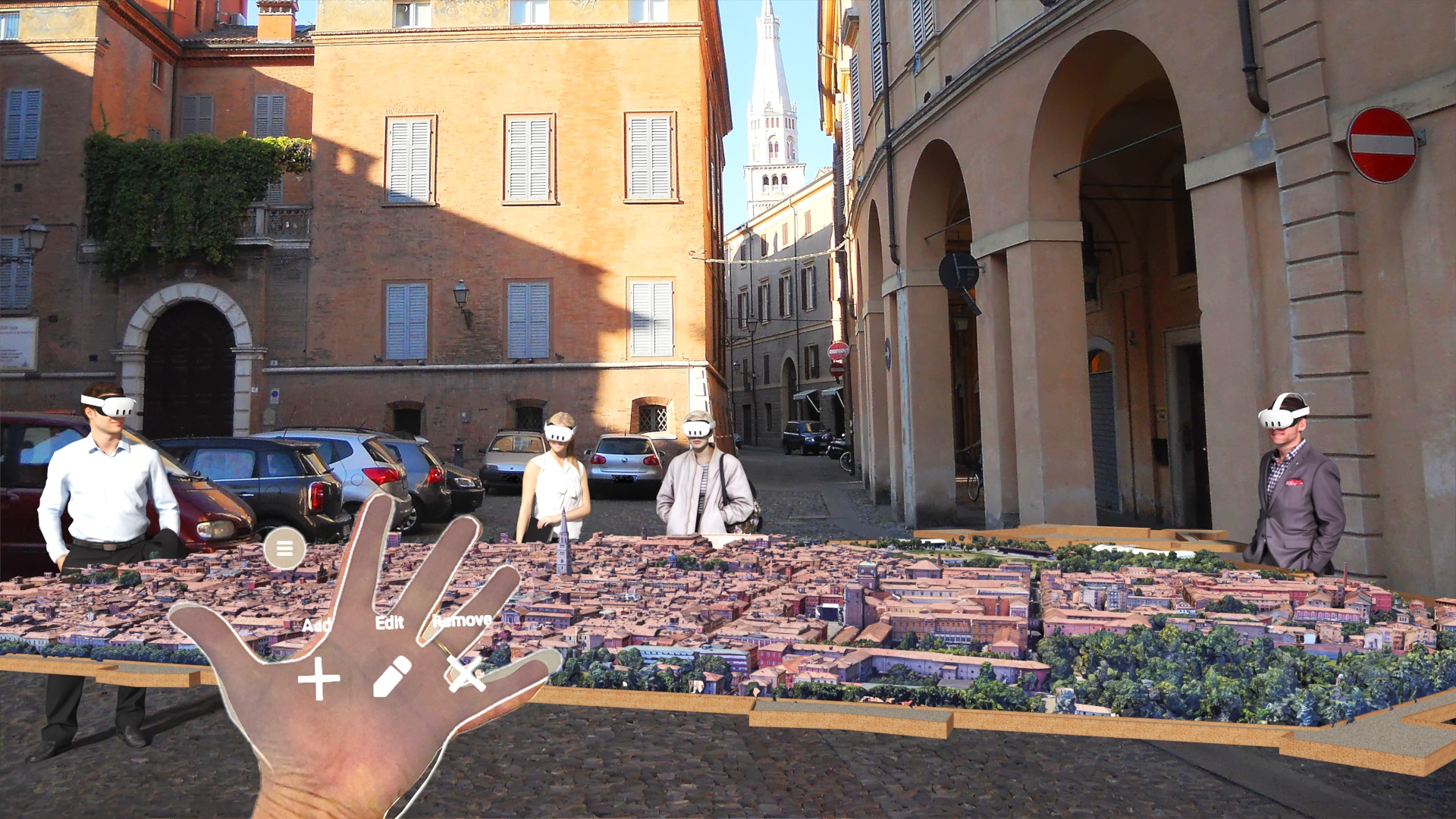
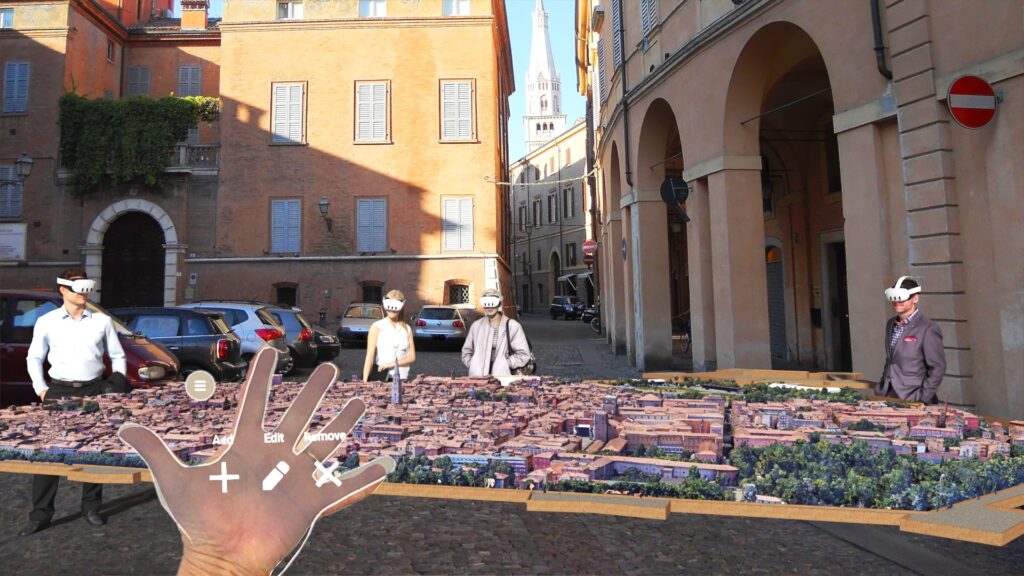
    There is an ancestral fascination in viewing the world from above, as if looking at a scale model. We took this concept and elevated it to the highest level of technological power, reconstructing the entire historic centre of Modena in a miniature XR model. An experience that allows citizens and tourists to “visually possess” the city, exploring every corner from a privileged, interactive perspective.

    Orienting oneself in a city of art or understanding its urban evolution is not always straightforward. Paper maps are static and standard navigation apps lack three-dimensional emotional engagement. There was a need for a tool that combined the precision of a technical survey with the magic of a playful and educational experience, capable of telling Modena’s story both to tourists seeing it for the first time and to residents wanting to rediscover it.

    Through a high-precision polygonal optimisation process, we brought the heart of Modena into our XR headsets. Users do not simply look at a photograph: they can walk around the reconstructed historic centre, crouch down to see the details of the Cathedral or the historic canals (now underground) and perceive the dialogue between the great architectural volumes.

    An ideal tool for tourist information points, museums or schools, where spatial understanding becomes immediate, overcoming all language or abstract barriers. Tourists gain an instant “mental map” of the city, enhancing the quality of their visit, while the local authority has an innovative tool for territorial marketing and participatory planning.

    App used: HDT Miniature.

  • Beyond the Surface of Time

    Beyond the Surface of Time

    Sector: Museum / Cultural Heritage / Urban Studies / Architecture

    Philological reconstruction of the defensive elements and original aesthetic appearance of the Rocca di Vignola (MO).

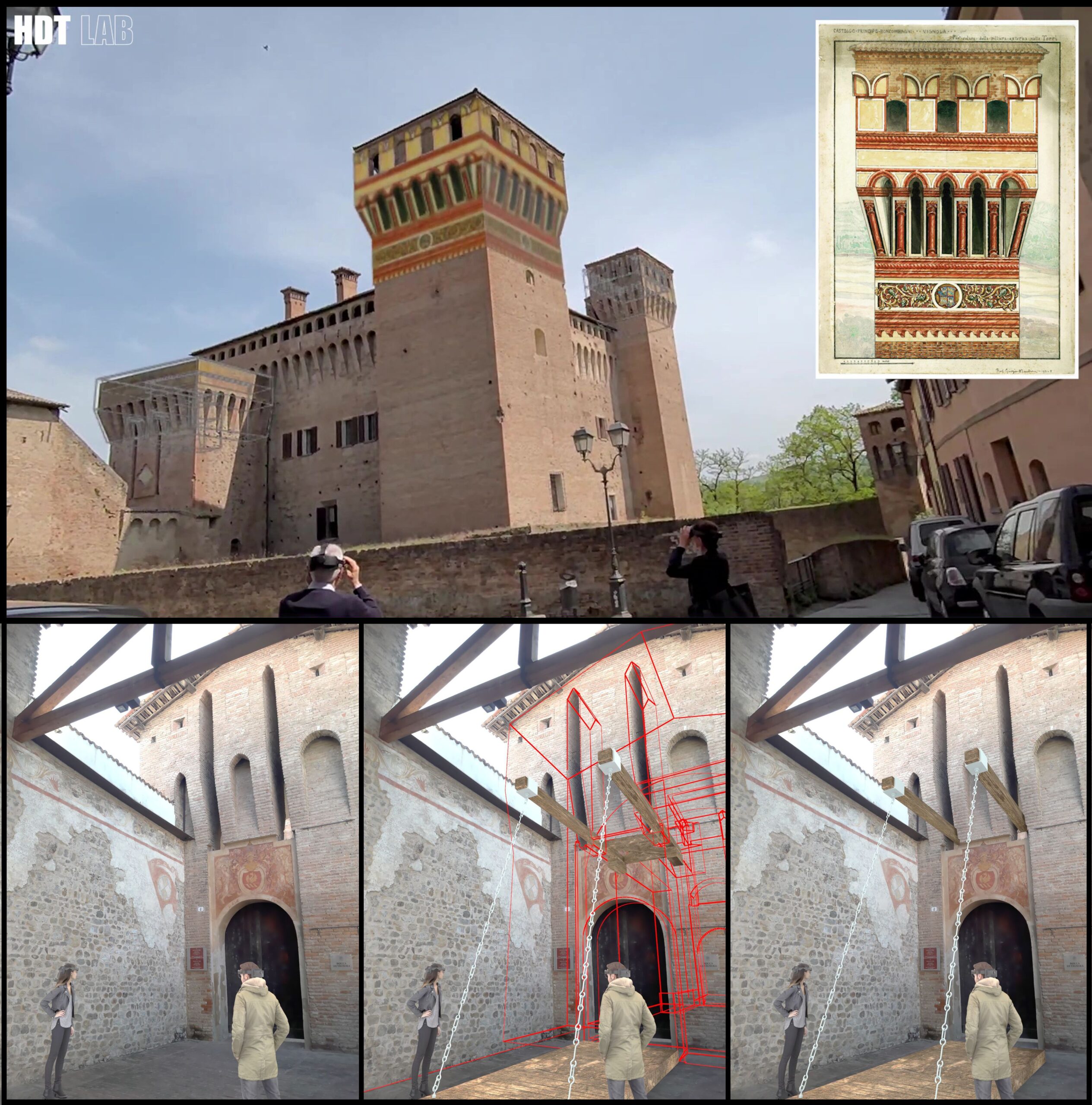
    The Rocca di Vignola is one of the most beautiful and interesting medieval fortifications in Italy, thanks to the Fondazione di Vignola, the castle’s owner, which stands out for its excellent maintenance and management of the asset. Being a complex sedimentation of history and architecture, the idea of showing and animating defensive elements now long gone — allowing users to understand their mechanical operation — and restoring the original fifteenth-century aesthetic, when the towers were not “bare stone” but richly decorated, without touching or altering the real structure, struck us as an important “intersection” between the evolution of siege warfare techniques and noble identity.

    In this project, the physical building was used as the load-bearing structure for the digital model, with three-dimensional modelling carried out to overlay the 3D model onto the existing structure with precision. This allowed the real fortress to be used as an “anchor” for the virtual elements.

    Drawbridges and defensive systems were reconstructed following the assessments of experts in castellology and fortified architecture from the Italian Institute of Castles, ensuring that the movement animations were mechanically plausible.

    Drawing on the beautiful “Tracce in Luce” project with its scientific analysis of the minimal pictorial traces still in existence — where colour and heraldry have returned to communicate the castle’s rank — we used vectorisation and texturing techniques to virtually reconstruct the patterns that once adorned the towers, restoring them to their original polychrome splendour.

    The experience for the user wearing the XR visor will be like a “walk” in the 15th century around the fortress. As they approach the entrances, virtual drawbridges will activate, revealing the complex system of counterweights, pins and chains at real scale. Looking up at the towers, the visor will in real time add fifteenth-century colours to the current walls, allowing the decorative scheme to be restored without the need for invasive restorations or scaffolding.

    Thanks to the 1:1 scale, the perception of volume and defensive power is total, transforming a static visit into an interactive history lesson. The result: an immediate understanding of military architecture concepts that would be complex to explain using only two-dimensional panels.

    App used: HDT Heritage.