Author: fabrizio

  • HDT Obj

    Viewer for managing industrial 3D digital twins on HMD Devices in Extended Reality (XR).
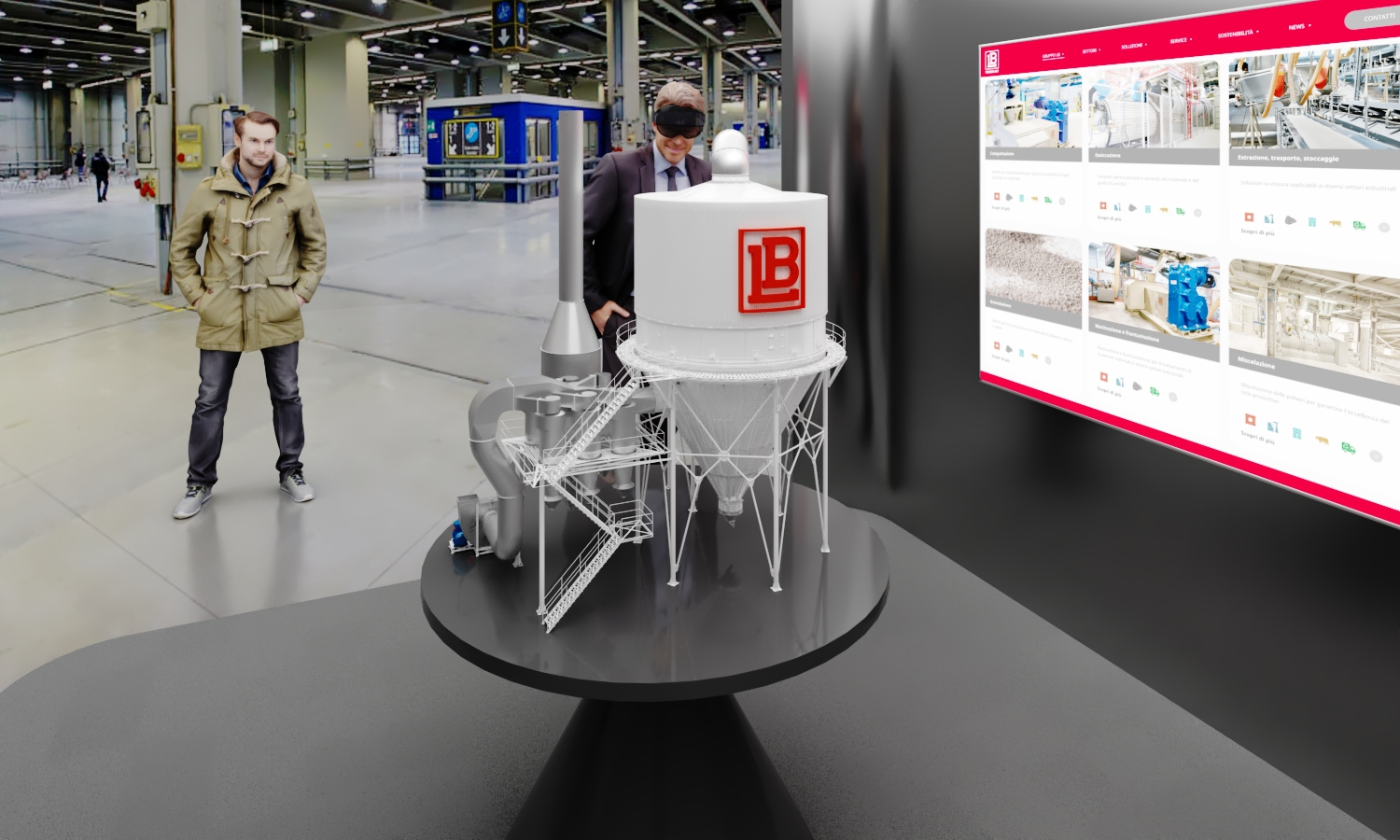
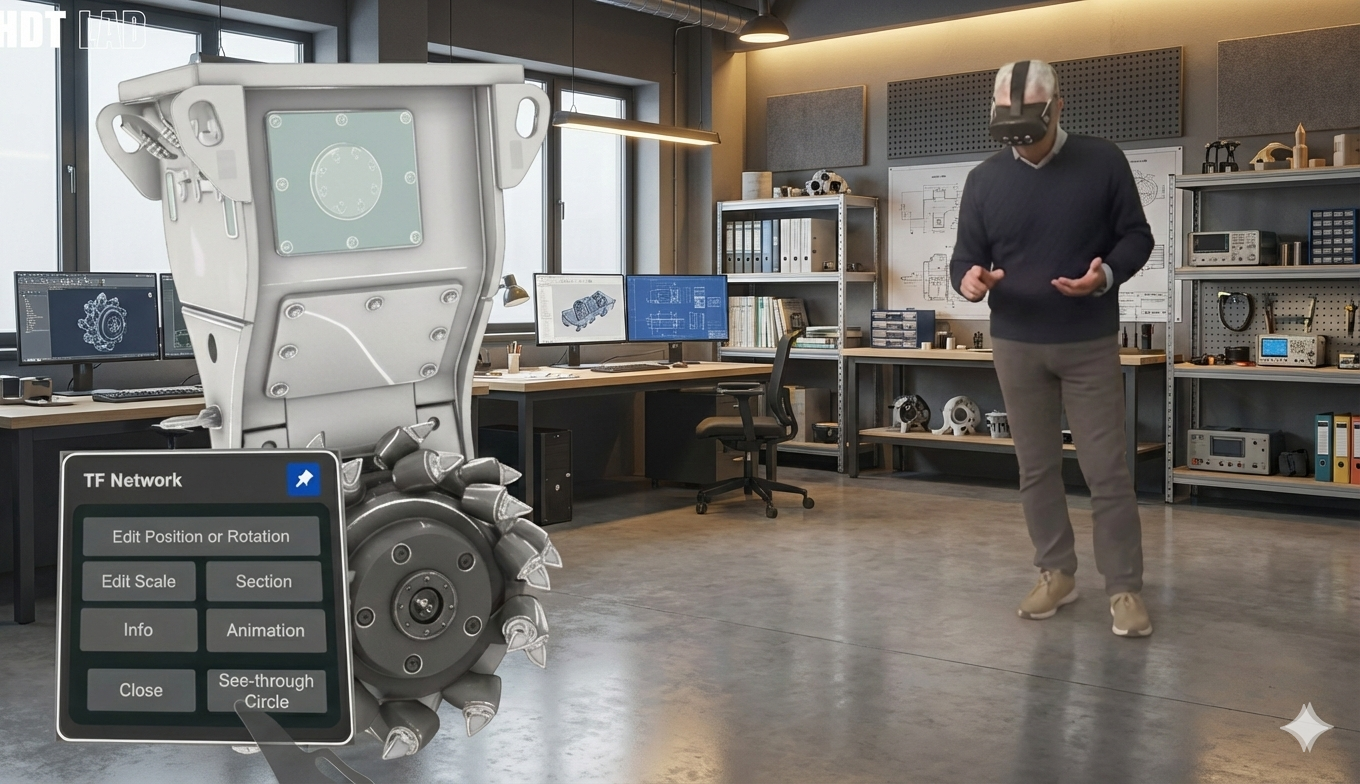
    Our flagship easy-to-use app for Meta Quest 3 headsets for displaying 3D models with broad applicability, especially for industrial use. It allows users to load digital twins adapted and optimised in the Unity environment, stored on their own cloud, and display them in standard or advanced-realism mode, anchoring them in real physical space.

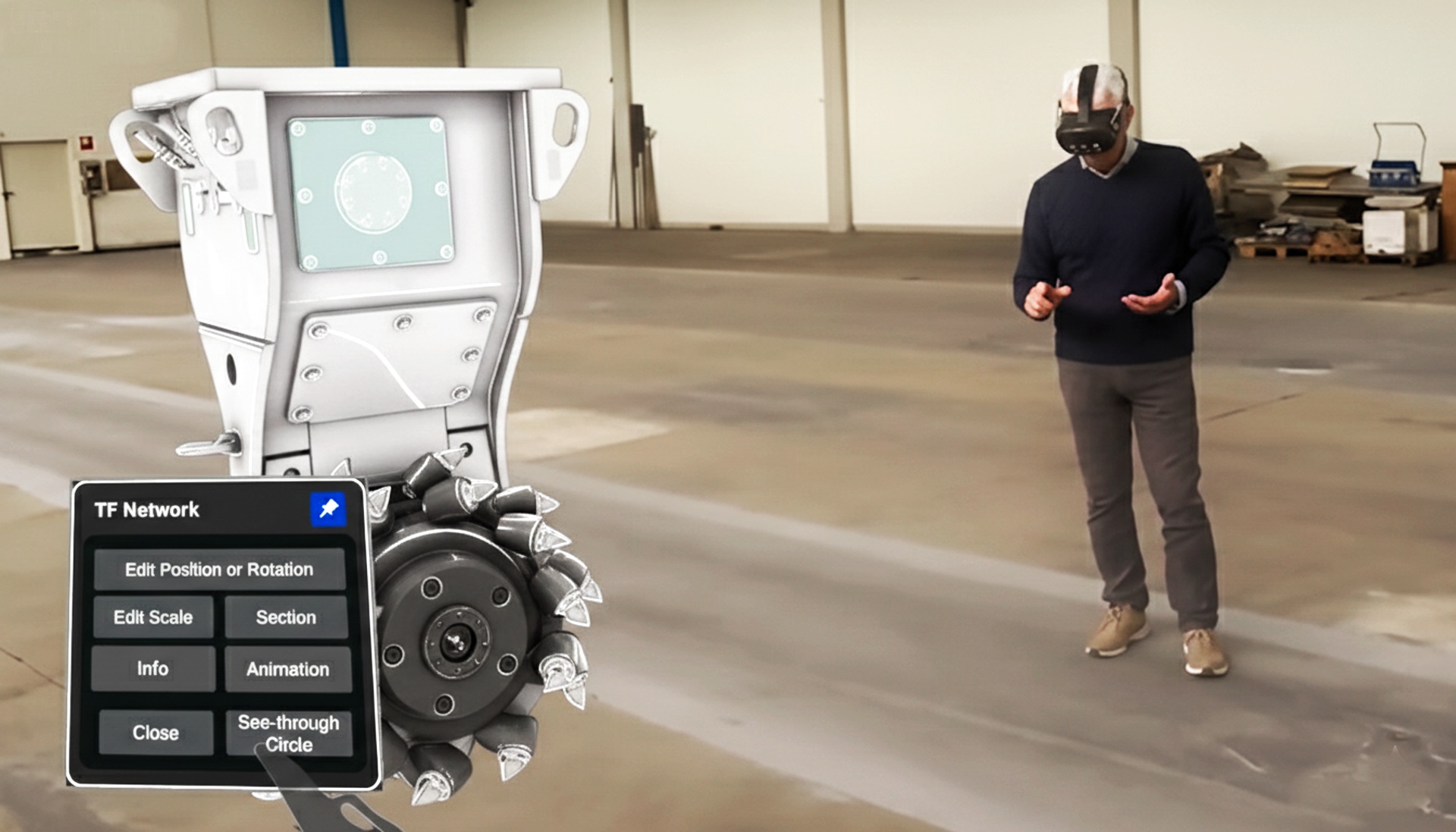
    Through a simple interactive menu operated entirely by hand gestures, displayed elements can be manipulated to change position, scale, cross-sections and animations, as well as to surface visual, audio and/or ISL video information.

    The “Multiplayer” feature is available, allowing the project to be presented to a network of headsets connected via the internet both locally and remotely — useful for multi-user presentations with a “Master” interacting with the loaded model and “Slave” participants viewing from multiple angles.

    Screenshots and/or audio-video files can be recorded. Content can be streamed remotely via video conferencing. The CAST function via Mirroring is also available.
    Privacy: HDT-OBJ does not use third-party analytics or advertising frameworks, does not record or distribute user information. 3D models are often confidential data that must not leave the organisation’s network; the App does not save files anywhere other than the user’s own cloud and works 100% offline in single-user mode.
  • HDT Suite

    • Industria 4.0
    • Architettura e Reale-Estate.
    • Arte, Cultura e Turismo.
    • Istruzione e Tempo libero.
  • Selling the Invisible

    Selling the Invisible

    Sector: Architecture / Real Estate / Interior Design

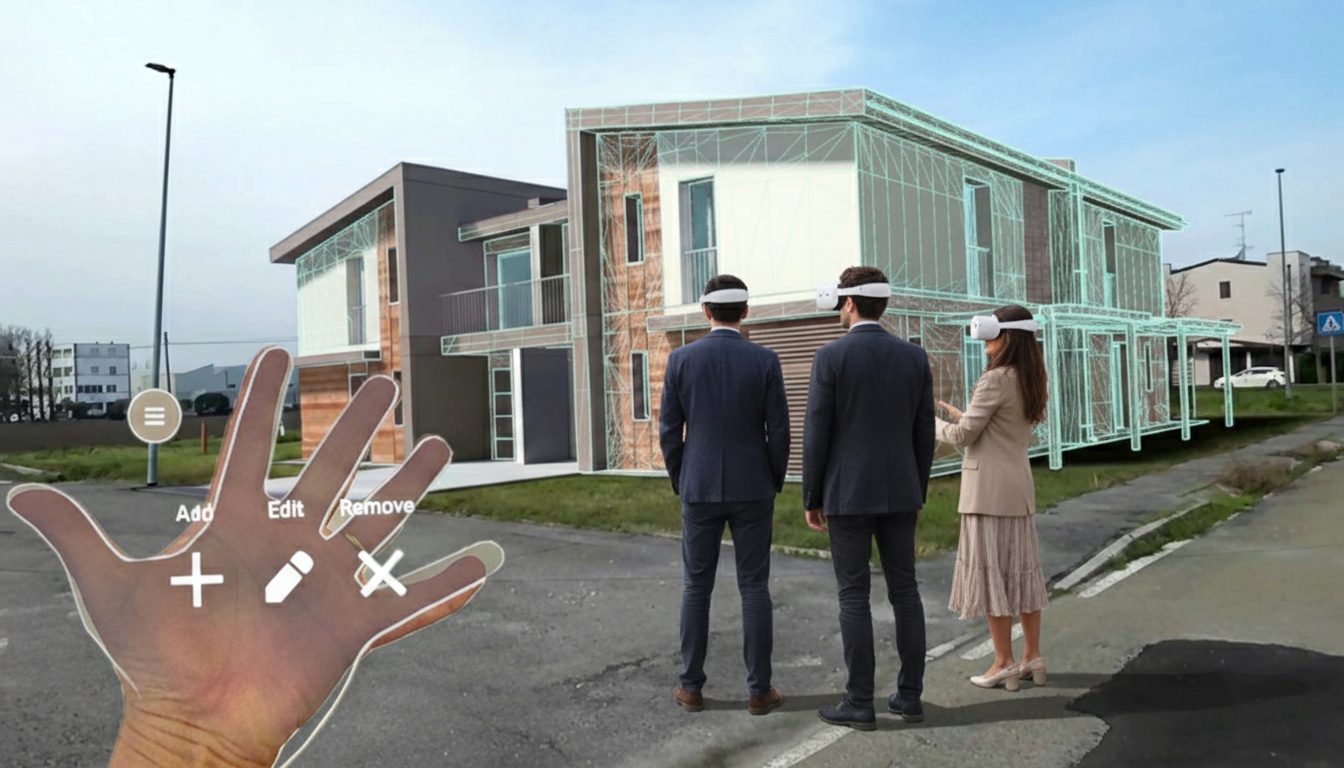
    Immersive Real-Time Pre-Visualisation for Prestige Real Estate.

    This case is fundamental because it shifts the focus to commercial concreteness and luxury real estate, addressing “future and purchasing decisions” and demonstrating that XR reality is not “an alternative” to traditional design, but its natural enhancement.

    A leading real estate and design agency needed to market a prestigious four-unit villa before the first stone had even been laid. The main challenge in the real estate sector is bridging the client’s “imagination gap”: even today, despite photorealistic static imagery being the de facto standard, it is hard to go from an empty plot of land to an emotional perception of one’s future home.

    The starting point was the 2D and 3D digital foundations provided by the design studio, and a solid technical collaboration with architect Sergio Brancolini. Applying our photorealistic texturing and dynamic lighting process, we transformed a technical drawing into a vibrant living experience, modelled with precision to be “anchored” exactly to the coordinates of the real plot of land.

    Using XR headsets, prospective buyers were able to walk in real time on the undeveloped land, watching the villa’s volume appear exactly where it will be built. Moving around the virtual structure at 1:1 scale, they were able to admire its aesthetic impact, the balance of proportions and the perfect architectural integration of volumes into the surrounding landscape.

    The preliminary visualisation of the exterior allowed solar exposure on the facades to be assessed and every aesthetic detail to be refined before the first excavation. The result was described as “exceptional” by the agency, as it removed all buyer uncertainty, dramatically accelerating the closure of negotiations and positioning the agency’s brand as a technology leader in the real estate market.

    App used: HDT Build.

  • Digital Justice in Piazza Grande

    Digital Justice in Piazza Grande

    Sector: Cultural Heritage / Urban Studies / Architecture

    Philological reconstruction of the former Palace of Justice of Modena.

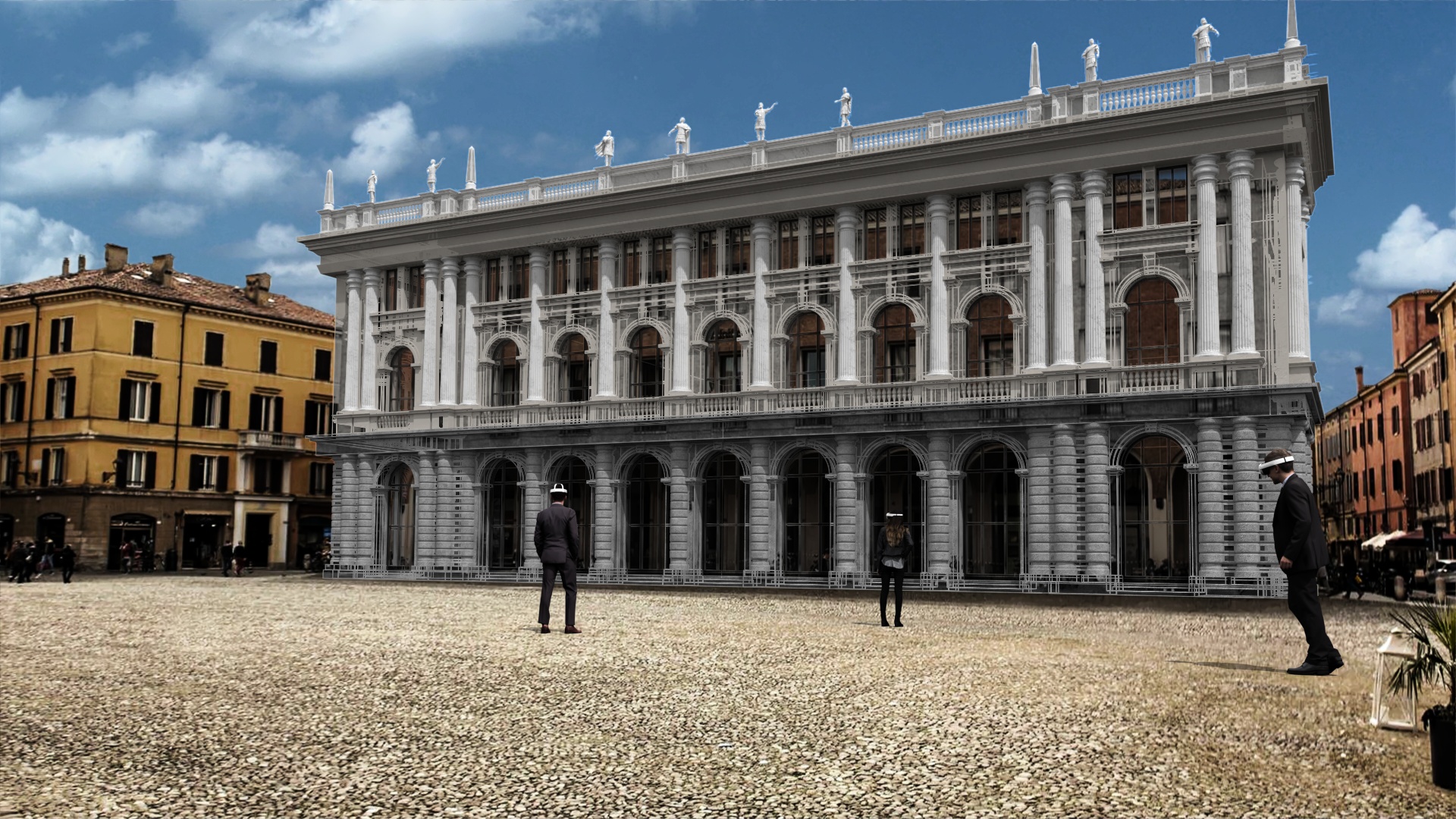
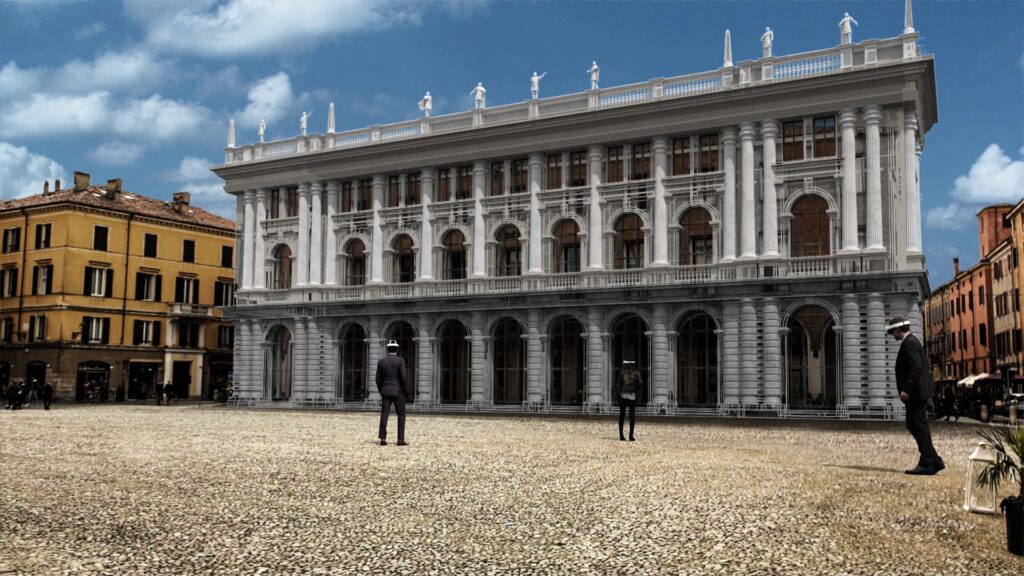
    In 1963, the urban fabric of Modena — a UNESCO World Heritage Site — suffered a profound controversy: the demolition of the former Palace of Justice in Piazza Grande to make way for a modern building (the current Cassa di Risparmio bank premises). Our aim was twofold: to restore the public’s perception of the original volumes and to enable a critical study of a vanished piece of the city, leaving no room for approximation.

    The project followed a rigorous methodology: geometric reconstruction based on period cadastral maps, archive photographs and historical surveys. The modelling respected exact volumetric ratios to guarantee architectural precision, with the use of advanced tools for generating textures consistent with the materials of the time (stone, brick and nineteenth-century finishes), restoring realism to surfaces of which only black-and-white photographs remained.

    Users were able to experience the reconstruction through two complementary modes:

    • At 1:1 scale (XR): Wearing the visor, the user found themselves physically standing in front of the Palazzo in Piazza Grande. This scale allowed them to perceive the original urban impact and the shadow the building cast over the square, highlighting the lost dialogue with the historic monuments still standing today.
    • In miniature (XR): An “architect’s eye view” for analysing the palazzo as a physical object on a virtual table, allowing decorative details to be observed that would otherwise be difficult to appreciate at full size.

    The virtual project allowed new generations to visually understand what many describe as an urban planning mistake. The experience generated a powerful emotional impact, demonstrating how XR can serve as a “time machine” for the symbolic repair of historical damage.

    App used: HDT Heritage.

  • Making the Legend Appear

    Making the Legend Appear

    Sector: Automotive Heritage / Mixed Reality / Innovative Events

    The project was born from the synergy between our expertise in immersive technologies and the Circolo della Biella of Modena, one of the most prestigious historic car clubs in the international landscape. At the Bologna Auto e Moto d’Epoca Fair, we transformed the exhibition space into a cutting-edge laboratory, taking the concept of “heritage conservation” beyond the physical display of vehicles.

    The goal was to allow visitors not only to admire the cars on display, but to actively engage with the history of Modenese motorsport in a technologically advanced way, transcending the physical limitations of the exhibition space.

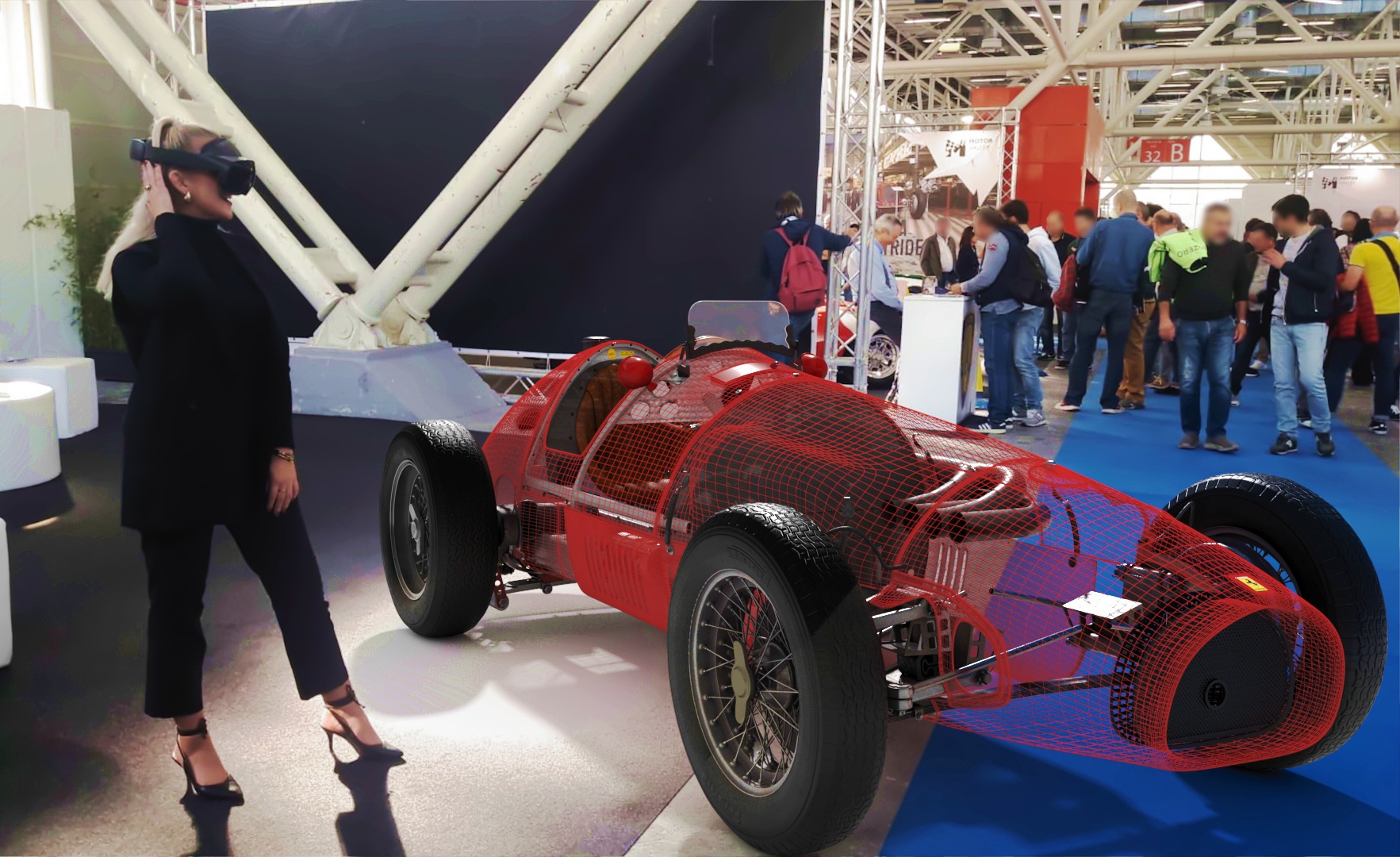
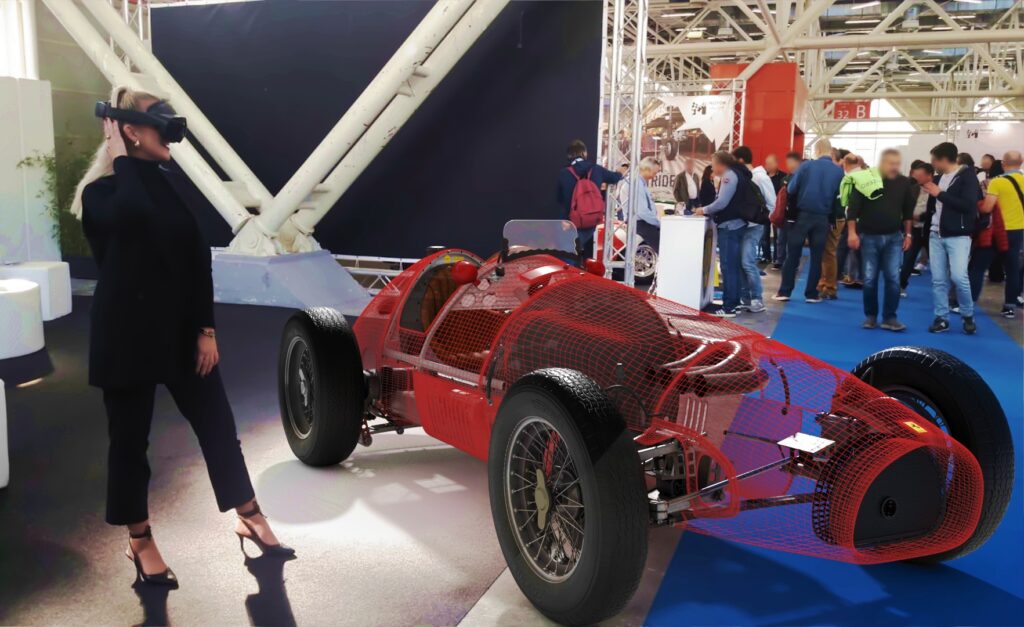
    While helping to manage the Club’s stand, we set up an adjacent area dedicated to Extended Reality (XR), and using state-of-the-art headsets, we implemented a real-time virtual insertion workflow: the Ferrari 500 F2, Alberto Ascari’s iconic single-seater, digitally reconstructed with philological rigour.

    The XR integration allowed visitors to see the car projected into the physical space of the stand, perceiving volumes, proportions and mechanical details as if the car were truly present. This proved to be an essential tool for automotive Cultural Heritage, making rare or too-fragile-to-move historic models accessible.

    The Circolo della Biella was perceived not only as a guardian of tradition, but as a pioneer in cultural dissemination through new digital media. Inserting a Ferrari 500 F2 into a trade fair pavilion via XR is not just a special effect, but a new way of writing automotive history.

  • Beyond the Display Case

    Beyond the Display Case

    Sector: Museum / Archaeology / Social (Inclusivity)

    Virtual reconstruction and manipulation of archaeological objects for Inclusive Accessibility.

    This case study is extraordinary because it shifts attention to two topics of great social value: universal accessibility and virtual tactile interaction. The idea of “extracting” an object from an unbreakable display case to allow anyone to study it up close is the dream of every museum curator.

    Archaeological museums often house small artefacts enclosed in display cases that limit volumetric and tactile understanding. The success of this project is the result of close synergy with the Museo Simonini of Castelfranco Emilia and its director, Dr Diana Neri, whose far-sighted vision made it possible to experiment with these technologies towards genuine scientific and educational utility, for inclusive enjoyment of archaeological heritage.

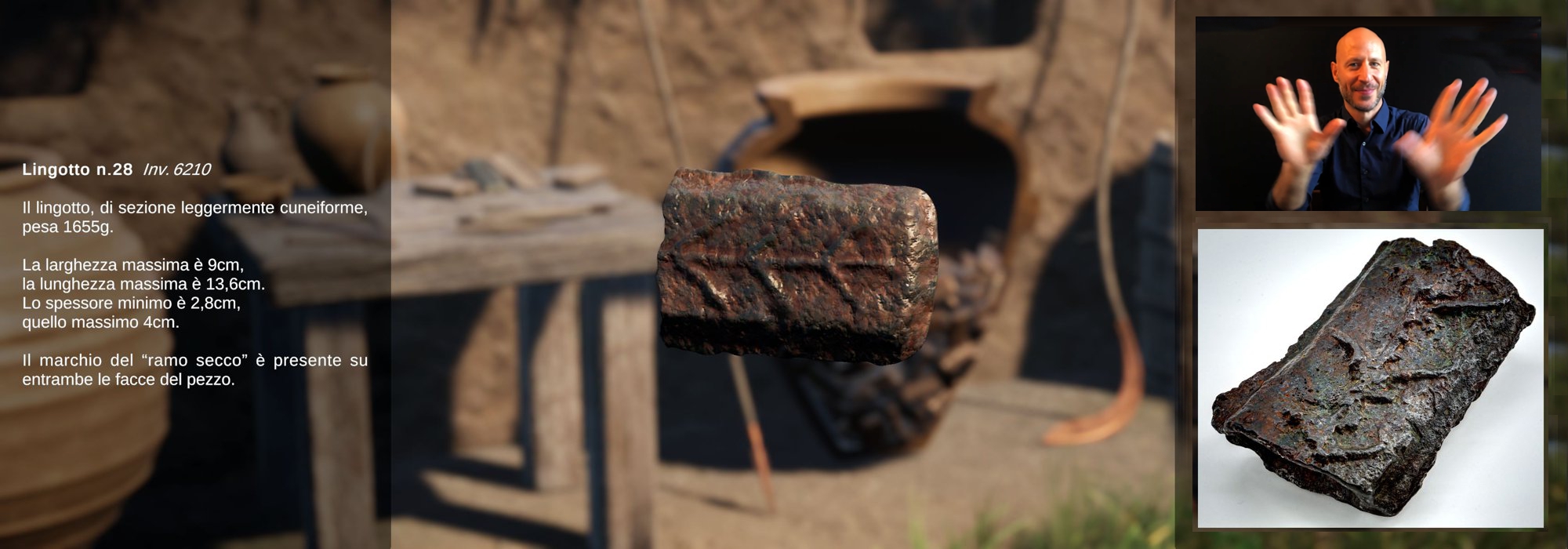
    In the case of Museo Simonini, the challenge was to allow visitors to examine the details of bronze ingots (Aes Signatum) dating from the 6th–5th century BC (Iron Age), discovered at the end of the nineteenth century inside a large ceramic vessel. These artefacts are fundamental for reconstructing the trade routes and economy of the populations that inhabited the Castelfranco Emilia area thousands of years ago.

    The artefacts were digitally modelled with extreme realism, creating high-fidelity “digital twins” that reproduce every engraving and porosity of the original material. Using state-of-the-art headsets, and approaching the display case, the visitor can virtually “extract” the ingot from behind the glass with a simple hand gesture, rotating and enlarging it in the physical space in front of them.

    The experience was enriched with Italian Sign Language (ISL) videos: instead of having to read external panels, the user views an ISL video integrated into the XR environment, which explains the history and use of the ingots in a natural and immersive way. The project transforms Museo Simonini into a benchmark of excellence for museum accessibility.

    App used: HDT Museum.

  • Training & Education

    Why use XR today

    • Experiential learning: you learn by doing, not just listening
    • Greater engagement: more attention, motivation and participation
    • Safety: simulation of complex or dangerous scenarios without risk
    • Cost reduction: fewer physical materials, travel and infrastructure
    • Accessibility: immersive training remotely and personalised
    • Objective assessment: real-time performance monitoring

    A look at the future

    • Educational Digital Twins to simulate real environments, processes and systems
    • Collaborative immersive classrooms, without geographical limits
    • New digital skills for the professions of tomorrow
    • Sustainability: fewer commutes, less waste, greater efficiency

    Who we address

    These solutions are aimed at schools, universities, training bodies and research centres, which can enrich educational programmes through new immersive experiences, practical simulations and interactive learning environments, improving training effectiveness and student engagement.

    At the same time, companies and vocational training organisations can use extended reality to develop upskilling and reskilling programmes, foster experiential learning and make training more accessible, safe and measurable.

    XR does not replace traditional teaching: it enhances it, transforming training from theoretical to experiential, from standard to personalised, from passive to engaging.

  • Industry 4.0

    Industry 4.0

    Extended Reality (XR) is a key technology for Industry 4.0, capable of connecting people, machines and data in an intuitive and immersive way, improving operational efficiency, safety and production continuity.

    Why use XR today

    • Assisted remote maintenance: real-time support with visual instructions and digital annotations
    • Cost optimisation: fewer site visits, fewer errors, fewer reworks
    • Operational safety: guidance in complex or dangerous environments
    • Trade fairs and congresses: presentation of industrial machinery at fairs. Visitors can see, explore and interact with machinery in an immersive way, as if they were truly present.

    A look at the future

    • Industrial Digital Twins to simulate plants, processes and future scenarios by modifying one or more variables in a model
    • Collaboration between technicians and specialists in shared XR environments
    • Smart and sustainable factories, with less waste and greater efficiency

    Who we address

    These solutions are aimed at manufacturing companies, process industries and industrial operators, who can optimise production and maintenance activities through immersive support tools, reducing downtime, improving safety and increasing operational efficiency.

    At the same time, technical service providers, system integrators and support teams can use extended reality to offer advanced remote maintenance, on-the-job training and real-time collaboration between experts and field operators.

    Extended Reality does not replace human skills: it enhances them, making the factory more connected, resilient and people-oriented.

  • Culture & Tourism

    Culture & Tourism

    Extended Reality (XR) offers new ways to tell, enhance and experience cultural and tourist heritage, transforming the visit into an engaging, accessible and memorable experience.

    Why use XR today

    • Immersive experiences in cultural sites: historical reconstructions and interactive narratives
    • Heritage enhancement: access to invisible or no-longer-existing content
    • Extended accessibility: inclusive enjoyment even remotely or with dedicated support
    • Experiential tourism: emotional involvement of the visitor
    • Reduction of physical impact on sensitive and monumental sites
    • Multilingual and customisable digital storytelling

    A look at the future

    • Digital Twins of cultural sites and territories, updated over time
    • Augmented, personalised and intelligent tourist itineraries
    • Virtual museums and destinations, without geographical barriers
    • XR + AI integration for virtual guides and adaptive storytelling
    • Sustainable, more aware and distributed tourism

    Who we address

    These solutions are aimed at museums, galleries and cultural conservation centres, which can enrich the visitor experience through historical re-enactments and new ways of interacting with artistic heritage, enhancing culture and art. At the same time, tourist and marketing agencies can use extended reality to create innovative virtual experiences, promote destinations and tours, and allow visitors to explore locations in an engaging and highly interactive manner.

    Extended Reality does not replace the real experience: it enriches it, making culture and tourism more accessible, engaging and future-oriented.

  • Architecture & Real Estate

    Extended Reality (XR) is transforming the way spaces and properties are designed, visualised and valued, making the experience more engaging and comprehensible.

    Why use XR today

    • Immersive visualisation of projects: realistic exploration of spaces before they are built
    • Better communication with clients and stakeholders: less ambiguity, clearer decision-making
    • Reduction of errors and revisions: early verification of volumes, materials and layouts
    • Experiential sales and marketing: interactive tours, even remotely
    • Real-time personalisation: materials, furnishings and configurations on request

    A look at the future

    • Digital Twins of buildings and neighbourhoods
    • Integrated design with BIM
    • Immersive experiences for smart buildings and smart cities
    • New real estate sales models, entirely digital and global
    • More sustainable architecture, thanks to advanced environmental simulations

    Who we address

    These solutions are aimed at architecture, engineering and design firms, which can improve design and communication processes through immersive visualisations, reducing errors, revisions and decision-making timescales.

    At the same time, property developers, agencies and investors can use extended reality to enhance projects and properties, create virtual visit experiences, personalise proposals and make the sales process more effective and engaging.

    Extended Reality does not replace the architectural project: it amplifies it, making every space more comprehensible, sustainable and human experience-oriented.